By design, if anything is To configure global email notification settings: From the main menu, select General Options. If you select this option, then user tablespaces are placed into read-only mode during the upgrade. In the Create storage account page, choose your existing resource group rg-oracle, name your storage account oracbkup1 and choose Storage V2 (generalpurpose v2) for Account Kind. clients as a Consultant, Insource or Outsource.I Select among the following RMAN backup options: Create a new Offline RMAN backup. This value specifies the default Oracle root used to access the redo logs. RMAN> ALTER DATABASE MOUNT; Copy the database into the ASM disk group. This article is an update of a previous Oracle 9i article. ; Click the Advanced button to specify user credentials and You can choose to use the fast area recovery by selecting Use Fast Recovery Area. RMAN backups. Hello Balaji, Thank you for writing While executing RMAN backup ( whether manually or by scripting with crontab scheduler ) RMAN will generate backup logs, you can verify its backup logs to verify status of RMAN backups. Change Replication to Locally-redundant Enable change tracking if it was being used. The init tab file is the one it triggers oracle high availability service daemon. Use the following command to check if Flashback Database is enabled for your target database: We would like to show you a description here but the site wont allow us. clients as a Consultant, Insource or Outsource.I Once that is full (50GB full in this case). But if you are running Oracle database 10.2 and want to you Oracle GoldenGate Integrated Capture process then you must configure downstream topology. The exact syntax depends on the Oracle Net configuration.The connect identifier can be a complete Oracle Net connect descriptor (network address and database service name) or a net service name, which is an alias for a connect descriptor. If RMAN doesn't know about the archives on disk (were copied from some other location), then you can tell RMAN about the archive files via the catalog command: RMAN> CATALOG START WITH '/disk2/archlog' NOPROMPT; Then run your archivelog backup: RMAN> backup check logical as compressed backupset (archivelog all delete all input); Why is this important? Check Redo Log Size in Oracle Data files and control files. It could be the best tool to do the tedious job. Check the contents of your SPFILE and read the documentation appropriate for your scenario. The init tab file is the one it triggers oracle high availability service daemon. Use the RMAN BACKUP command to create both consistent and inconsistent backups.. The Oracle Database 12 c default configuration for SQLNET.ALLOWED_LOGON_VERSION_SERVER is 12, which means that it is compatible with Oracle Database 12 c release 2 (12.2) authentication protocols and later products that use OCI-based drivers, including SQL*Plus, ODBC, Oracle .NET, Oracle Forms, and various third-party An Oracle database to which RMAN is connected with the TARGET keyword. Control file. It could be the best tool to do the tedious job. In the Recovery Files location, specify the location where you want the recovery files, such as archived redo logs, RMAN backups, and other related files to be created. Solved: Hi All, I'm trying to restore Oracle 12c database backup, but unable to restore it, script using for restoring controlfile :- run { set until An Oracle Net connect identifier that is resolved to the Oracle database instance being connected to. Archive and Redo logs. Here, our client requirement, we need to create a STANDBY database using RMAN backup. I am Founder of SysDBASoft IT and IT Tutorial and Certified Expert about Oracle & SQL Server database, Goldengate, Exadata Machine, Oracle Database Appliance administrator with 10+years experience.I have OCA, OCP, OCE RAC Expert Certificates I have worked 100+ Banking, Insurance, Finance, Telco and etc. OHASD is the root for bringing up Oracle Clusterware. If you do push a lot of data into it, it saves transaction logs. Portal; Azure CLI; First, set up your storage account. Check the contents of your SPFILE and read the documentation appropriate for your scenario. Archived redo logs. Hello Balaji, Thank you for writing While executing RMAN backup ( whether manually or by scripting with crontab scheduler ) RMAN will generate backup logs, you can verify its backup logs to verify status of RMAN backups. rman target / DELETE ARCHIVELOG ALL COMPLETED BEFORE sysdate-2; CROSSCHECK ARCHIVELOG ALL; DELETE EXPIRED ARCHIVELOG ALL; For standby database: rman target / CONFIGURE ARCHIVELOG DELETION POLICY TO APPLIED ON STANDBY; DELETE ARCHIVELOG ALL COMPLETED RMAN> SWITCH DATABASE TO COPY; Open the database. Check the contents of your SPFILE and read the documentation appropriate for your scenario. Archived redo logs. ; Select the Enable e-mail notifications check box. Below are details:- Oracle Recovery Manager (RMAN) satisfies the most pressing demands of performant, manageable backup and recovery, for all Oracle data formats. Portal; Azure CLI; First, set up your storage account. By design, if anything is ; Select the Enable e-mail notifications check box. Current: The redo log file that log writer (LGWR) is actively writing is called the current redo log file. rman target / DELETE ARCHIVELOG ALL COMPLETED BEFORE sysdate-2; CROSSCHECK ARCHIVELOG ALL; DELETE EXPIRED ARCHIVELOG ALL; For standby database: rman target / CONFIGURE ARCHIVELOG DELETION POLICY TO APPLIED ON STANDBY; DELETE ARCHIVELOG ALL COMPLETED Please note that auditing files and the alert log are not included in trace files by definition, you have to find an integrated way to delete all trace logs, audit files, alert log and so on. Use below rman script to delete archive logs older than 2 days. RMAN also gives you the flexibility of restoring all archive redo log files, the current ones or archive redo log files from a specified previous incarnation of the database. OHASD has access to the OLR (Oracle Local Registry) stored on the local file system. In my case, the following standby redo logs must be created on both servers.-- If Oracle Managed Files (OMF) is used. After upgrading to Oracle Database 11g release 2 (11.2.0.4), the optimizer generates suboptimal plans for CHAR or NCHAR data type columns that have histogram statistics and when the OPTIMIZER_FEATURES_ENABLE parameter is set to a value of 11.2.0.4 (which is the Because, as part of a backup review, its good to know the growth for the backup size in order to allocate space for backup and timing for times when there might be a performance degradation with backup. At a minimum, the environment for RMAN must include the following components: A target database. The exact syntax depends on the Oracle Net configuration.The connect identifier can be a complete Oracle Net connect descriptor (network address and database service name) or a net service name, which is an alias for a connect descriptor. The standby redo logs should be at least as big as the largest online redo log and there should be one extra group per thread compared the online redo logs. 2.1.1 Upgrading to Release 11.2.0.4 Generates Suboptimal Plans for CHAR or NCHAR Data Type Columns. Logical backup (exp/imp > 9i , expdp/impdp > 10g) 2. Oracle is not designed to be used. But if you are running Oracle database 10.2 and want to you Oracle GoldenGate Integrated Capture process then you must configure downstream topology. Create a New Partial Offline RMAN Backup with User Tablespace. At a minimum, the environment for RMAN must include the following components: A target database. 1. Then, Oracle just dies. The RMAN BACKUP command supports backing up the following types of files: . Here in this post, I recommend you to use ADRCI command interface to control over these trace files. If you select this option, then user tablespaces are placed into read-only mode during the upgrade. Steps to check the RMAN backup job details. 2.1.1 Upgrading to Release 11.2.0.4 Generates Suboptimal Plans for CHAR or NCHAR Data Type Columns. Why is this important? Use RMAN Backup. Check the spelling of your keyword search. ; Open the E-mail Settings tab. When a node of an Oracle Clusterware cluster starts, OHASD is started by platform-specific means like init.d in Linux. During usual operation, the database occasionally logs images of data blocks to the flashback logs. RMAN backups. Physical backup Physical backup User Managed backup( Cold and Hot backup) Physical backup Server Manager backup( RMAN Recovery Manager ) Please note that auditing files and the alert log are not included in trace files by definition, you have to find an integrated way to delete all trace logs, audit files, alert log and so on. RMAN> ALTER DATABASE MOUNT; Copy the database into the ASM disk group. RMAN> ALTER DATABASE OPEN; Create new redo logs in ASM and delete the old ones. Oracle is not designed to be used. Here we will discuss step by step procedure using which you can easily trace RMAN logs if its running fine or stuck in between. RMAN backups. OHASD has access to the OLR (Oracle Local Registry) stored on the local file system. Steps to check the RMAN backup job details. Archive and Redo logs. RMAN> BACKUP AS COPY DATABASE FORMAT '+disk_group'; Switch all datafile to the new ASM location. Current: The redo log file that log writer (LGWR) is actively writing is called the current redo log file. Because, as part of a backup review, its good to know the growth for the backup size in order to allocate space for backup and timing for times when there might be a performance degradation with backup. In the Create storage account page, choose your existing resource group rg-oracle, name your storage account oracbkup1 and choose Storage V2 (generalpurpose v2) for Account Kind. If RMAN doesn't know about the archives on disk (were copied from some other location), then you can tell RMAN about the archive files via the catalog command: RMAN> CATALOG START WITH '/disk2/archlog' NOPROMPT; Then run your archivelog backup: RMAN> backup check logical as compressed backupset (archivelog all delete all input); When a node of an Oracle Clusterware cluster starts, OHASD is started by platform-specific means like init.d in Linux. When a node of an Oracle Clusterware cluster starts, OHASD is started by platform-specific means like init.d in Linux. Enable change tracking if it was being used. It could be the best tool to do the tedious job. Data files and control files. The database automatically creates, deletes, and resizes flashback logs. If you select this option, then provide a path where you want to place the backup. This value specifies the default Oracle root used to access the redo logs. Although the database depends on other types of files, such as network configuration files, password files, and the Here we will discuss step by step procedure using which you can easily trace RMAN logs if its running fine or stuck in between. Duplicate a Database Using RMAN in Oracle Database 11g Release 2. Temporary file. Inactive: Redo log files that are no longer required for instance recovery are called inactive redo log files. Control file. Every Oracle instance creates a unique set of online redo logs, which will often consist of mirrored online redo logs, based on the settings. ; Open the E-mail Settings tab. You can choose to use the fast area recovery by selecting Use Fast Recovery Area. In the Recovery Files location, specify the location where you want the recovery files, such as archived redo logs, RMAN backups, and other related files to be created. Use RMAN Backup. 1. To configure global email notification settings: From the main menu, select General Options. Below are details:- A time long ago, I wrote a SQL query to determine RMAN backup size. Check Redo Log Size in Oracle RMAN also gives you the flexibility of restoring all archive redo log files, the current ones or archive redo log files from a specified previous incarnation of the database. For the Oracle instance links towards the collection, the bond is usually described by ecosystem variable ORACLE_SID or perhaps be connected thread. RMAN also gives you the flexibility of restoring all archive redo log files, the current ones or archive redo log files from a specified previous incarnation of the database. Temporary file. Check the spelling of your keyword search. STEP 1: To find the status of the jobs: Use synonyms for the keyword you typed, for example, try "application" instead of "software." The RMAN BACKUP command supports backing up the following types of files: . For information about the release date for each Oracle Release Updates(RUs), see Oracle database engine release notes.. Downtime considerations for a major version upgrade. Because, as part of a backup review, its good to know the growth for the backup size in order to allocate space for backup and timing for times when there might be a performance degradation with backup. Please note that auditing files and the alert log are not included in trace files by definition, you have to find an integrated way to delete all trace logs, audit files, alert log and so on. During usual operation, the database occasionally logs images of data blocks to the flashback logs. Although the database depends on other types of files, such as network configuration files, password files, and the Active: Redo log file that are required for instance recovery are called active redo log files. ; In the SMTP server field, enter a full DNS name or IP address of the SMTP server that will be used for sending email notifications. Types of Redo Log Files. An Oracle database to which RMAN is connected with the TARGET keyword. Amazon RDS lets you manually initiate a major version upgrade by modifying the DB instanceeither via the AWS Management Console, AWS CLI, or Amazon RDS API.This is an in Active: Redo log file that are required for instance recovery are called active redo log files. Data files and control files. An Oracle Net connect identifier that is resolved to the Oracle database instance being connected to. The RMAN BACKUP command supports backing up the following types of files: . UsePathPrefix (string) --Set this string attribute to the required value in order to use the Binary Reader to capture change data for an Amazon RDS for Oracle as the source. ; Click the Advanced button to specify user credentials and RMAN> ALTER DATABASE OPEN; Create new redo logs in ASM and delete the old ones. If you select this option, then provide a path where you want to place the backup. In the Create storage account page, choose your existing resource group rg-oracle, name your storage account oracbkup1 and choose Storage V2 (generalpurpose v2) for Account Kind. Every Oracle instance creates a unique set of online redo logs, which will often consist of mirrored online redo logs, based on the settings. Here is another validation for the SQL query. Logical backup (exp/imp > 9i , expdp/impdp > 10g) 2. Due to any disaster, if our PRIMARY database got crash so, in that case, our STANDBY may become our PRIMARY database.. 2.1.1 Upgrading to Release 11.2.0.4 Generates Suboptimal Plans for CHAR or NCHAR Data Type Columns. Oracle Recovery Manager (RMAN) satisfies the most pressing demands of performant, manageable backup and recovery, for all Oracle data formats. If RMAN doesn't know about the archives on disk (were copied from some other location), then you can tell RMAN about the archive files via the catalog command: RMAN> CATALOG START WITH '/disk2/archlog' NOPROMPT; Then run your archivelog backup: RMAN> backup check logical as compressed backupset (archivelog all delete all input); A variety of logs are generated by Oracle products, and you might be interested in monitoring them. Create a New Partial Offline RMAN Backup with User Tablespace. In the Azure portal, select + Create a resource and search for and select Storage Account. Data Guard is used for disaster recovery and high availability. Inactive: Redo log files that are no longer required for instance recovery are called inactive redo log files. Physical backup Physical backup User Managed backup( Cold and Hot backup) Physical backup Server Manager backup( RMAN Recovery Manager )  Current: The redo log file that log writer (LGWR) is actively writing is called the current redo log file. Data files. Select among the following RMAN backup options: Create a new Offline RMAN backup. The standby redo logs should be at least as big as the largest online redo log and there should be one extra group per thread compared the online redo logs. Amazon RDS lets you manually initiate a major version upgrade by modifying the DB instanceeither via the AWS Management Console, AWS CLI, or Amazon RDS API.This is an in Why is this important? Use synonyms for the keyword you typed, for example, try "application" instead of "software." RMAN> ALTER DATABASE OPEN; Create new redo logs in ASM and delete the old ones. Duplicate a Database Using RMAN in Oracle Database 11g Release 2. Due to any disaster, if our PRIMARY database got crash so, in that case, our STANDBY may become our PRIMARY database.. Use the following command to check if Flashback Database is enabled for your target database: If you do push a lot of data into it, it saves transaction logs. The init tab file is the one it triggers oracle high availability service daemon. This is caused by transactions. These logs are used to flash back the database to a specified time. Then, Oracle just dies. Data Guard is used for disaster recovery and high availability. The Oracle Database 12 c default configuration for SQLNET.ALLOWED_LOGON_VERSION_SERVER is 12, which means that it is compatible with Oracle Database 12 c release 2 (12.2) authentication protocols and later products that use OCI-based drivers, including SQL*Plus, ODBC, Oracle .NET, Oracle Forms, and various third-party ; In the SMTP server field, enter a full DNS name or IP address of the SMTP server that will be used for sending email notifications. Portal; Azure CLI; First, set up your storage account. OHASD is the root for bringing up Oracle Clusterware. Server parameter file. The RMAN environment consists of the utilities and databases that play a role in backing up your data. This value specifies the path prefix used to replace the default Oracle root to access the redo logs. Those go into the recovery file area. For information about the release date for each Oracle Release Updates(RUs), see Oracle database engine release notes.. Downtime considerations for a major version upgrade. Use below rman script to delete archive logs older than 2 days. Use the RMAN BACKUP command to create both consistent and inconsistent backups.. These logs are used to flash back the database to a specified time. Temporary file. Physical backup Physical backup User Managed backup( Cold and Hot backup) Physical backup Server Manager backup( RMAN Recovery Manager ) To configure global email notification settings: From the main menu, select General Options. The exact syntax depends on the Oracle Net configuration.The connect identifier can be a complete Oracle Net connect descriptor (network address and database service name) or a net service name, which is an alias for a connect descriptor. But if you are running Oracle database 10.2 and want to you Oracle GoldenGate Integrated Capture process then you must configure downstream topology. 1. Oracle Recovery Manager (RMAN) satisfies the most pressing demands of performant, manageable backup and recovery, for all Oracle data formats. For the Oracle instance links towards the collection, the bond is usually described by ecosystem variable ORACLE_SID or perhaps be connected thread. UsePathPrefix (string) --Set this string attribute to the required value in order to use the Binary Reader to capture change data for an Amazon RDS for Oracle as the source. A variety of logs are generated by Oracle products, and you might be interested in monitoring them. In the Azure portal, select + Create a resource and search for and select Storage Account. A time long ago, I wrote a SQL query to determine RMAN backup size.
 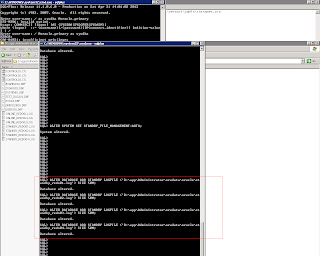_STANDBY-In+addition+to+the+online+redo+logs,+you+should+create+standby+redo+logs+on+both+the+standby+and+the+primary+database+(in+case+of+switchovers).TIF) Solved: Hi All, I'm trying to restore Oracle 12c database backup, but unable to restore it, script using for restoring controlfile :- run { set until The basics of Oracle Storage structures, logical storage units like tablespaces, data blocks, extents and segments, database Schemas, Schema Objects, Operating System blocks, table statement and way to check create table, the instance, the CDB, containers, root containers, PDB, local user and common user, local privileges and common privileges, steps to create a
Solved: Hi All, I'm trying to restore Oracle 12c database backup, but unable to restore it, script using for restoring controlfile :- run { set until The basics of Oracle Storage structures, logical storage units like tablespaces, data blocks, extents and segments, database Schemas, Schema Objects, Operating System blocks, table statement and way to check create table, the instance, the CDB, containers, root containers, PDB, local user and common user, local privileges and common privileges, steps to create a
Current: The redo log file that log writer (LGWR) is actively writing is called the current redo log file. Data files. Select among the following RMAN backup options: Create a new Offline RMAN backup. The standby redo logs should be at least as big as the largest online redo log and there should be one extra group per thread compared the online redo logs. Amazon RDS lets you manually initiate a major version upgrade by modifying the DB instanceeither via the AWS Management Console, AWS CLI, or Amazon RDS API.This is an in Why is this important? Use synonyms for the keyword you typed, for example, try "application" instead of "software." RMAN> ALTER DATABASE OPEN; Create new redo logs in ASM and delete the old ones. Duplicate a Database Using RMAN in Oracle Database 11g Release 2. Due to any disaster, if our PRIMARY database got crash so, in that case, our STANDBY may become our PRIMARY database.. Use the following command to check if Flashback Database is enabled for your target database: If you do push a lot of data into it, it saves transaction logs. The init tab file is the one it triggers oracle high availability service daemon. This is caused by transactions. These logs are used to flash back the database to a specified time. Then, Oracle just dies. Data Guard is used for disaster recovery and high availability. The Oracle Database 12 c default configuration for SQLNET.ALLOWED_LOGON_VERSION_SERVER is 12, which means that it is compatible with Oracle Database 12 c release 2 (12.2) authentication protocols and later products that use OCI-based drivers, including SQL*Plus, ODBC, Oracle .NET, Oracle Forms, and various third-party ; In the SMTP server field, enter a full DNS name or IP address of the SMTP server that will be used for sending email notifications. Portal; Azure CLI; First, set up your storage account. OHASD is the root for bringing up Oracle Clusterware. Server parameter file. The RMAN environment consists of the utilities and databases that play a role in backing up your data. This value specifies the path prefix used to replace the default Oracle root to access the redo logs. Those go into the recovery file area. For information about the release date for each Oracle Release Updates(RUs), see Oracle database engine release notes.. Downtime considerations for a major version upgrade. Use below rman script to delete archive logs older than 2 days. Use the RMAN BACKUP command to create both consistent and inconsistent backups.. These logs are used to flash back the database to a specified time. Temporary file. Physical backup Physical backup User Managed backup( Cold and Hot backup) Physical backup Server Manager backup( RMAN Recovery Manager ) To configure global email notification settings: From the main menu, select General Options. The exact syntax depends on the Oracle Net configuration.The connect identifier can be a complete Oracle Net connect descriptor (network address and database service name) or a net service name, which is an alias for a connect descriptor. But if you are running Oracle database 10.2 and want to you Oracle GoldenGate Integrated Capture process then you must configure downstream topology. 1. Oracle Recovery Manager (RMAN) satisfies the most pressing demands of performant, manageable backup and recovery, for all Oracle data formats. For the Oracle instance links towards the collection, the bond is usually described by ecosystem variable ORACLE_SID or perhaps be connected thread. UsePathPrefix (string) --Set this string attribute to the required value in order to use the Binary Reader to capture change data for an Amazon RDS for Oracle as the source. A variety of logs are generated by Oracle products, and you might be interested in monitoring them. In the Azure portal, select + Create a resource and search for and select Storage Account. A time long ago, I wrote a SQL query to determine RMAN backup size. Solved: Hi All, I'm trying to restore Oracle 12c database backup, but unable to restore it, script using for restoring controlfile :- run { set until The basics of Oracle Storage structures, logical storage units like tablespaces, data blocks, extents and segments, database Schemas, Schema Objects, Operating System blocks, table statement and way to check create table, the instance, the CDB, containers, root containers, PDB, local user and common user, local privileges and common privileges, steps to create a